A Plastic-Free Cannabis Café: How Grandma Jazz Chose Reuse Over Convenience
Rapeeporn0 views
Going plastic-free was not a branding decision.
It was a practical one.
From the start, we were faced with a simpler question:
Do we really need to hand out small plastic bags that are used once, thrown away, and end up washing up on the beach?
At the time, hardly anyone was asking that.
We decided to.
⸻
Plastic is convenient.
That’s why it’s everywhere.
Cups, bags, containers, wrappers — each one small on its own, but relentless in accumulation. Once you notice it, it’s hard to ignore.
We didn’t want to run a space that felt calm inside while contributing to chaos outside.
So we started removing plastic one decision at a time.
⸻
There was no master plan.
Some changes were obvious.
Others were frustrating.
Many were more expensive.
Suppliers weren’t always helpful.
Alternatives weren’t always good.
And sometimes the “eco” option turned out to be worse in practice.
We learned quickly that going plastic-free isn’t about being perfect.
It’s about being honest.
⸻
What replaced plastic wasn’t one solution — it was many small ones.
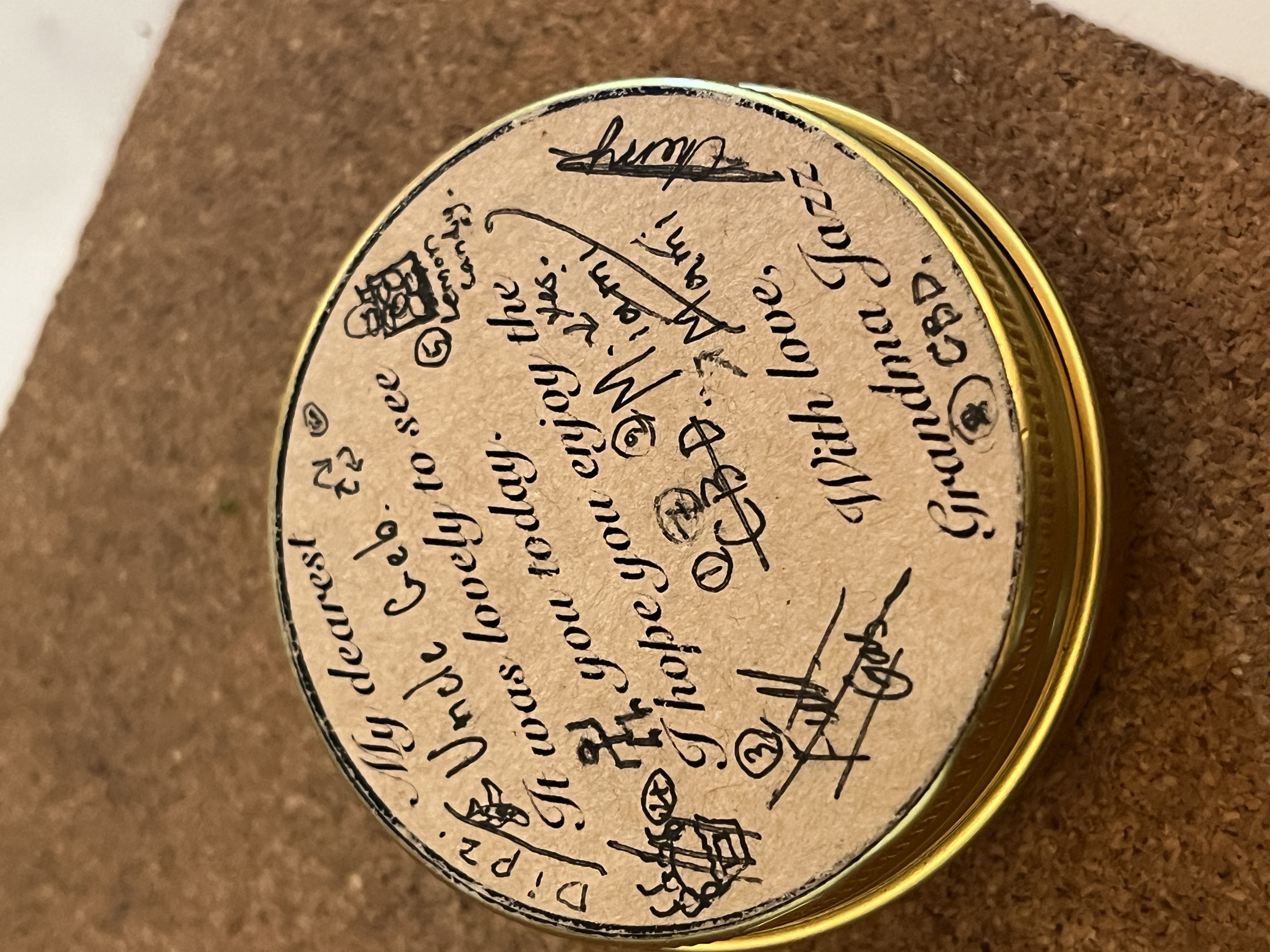
Reusable tins instead of disposable packaging.
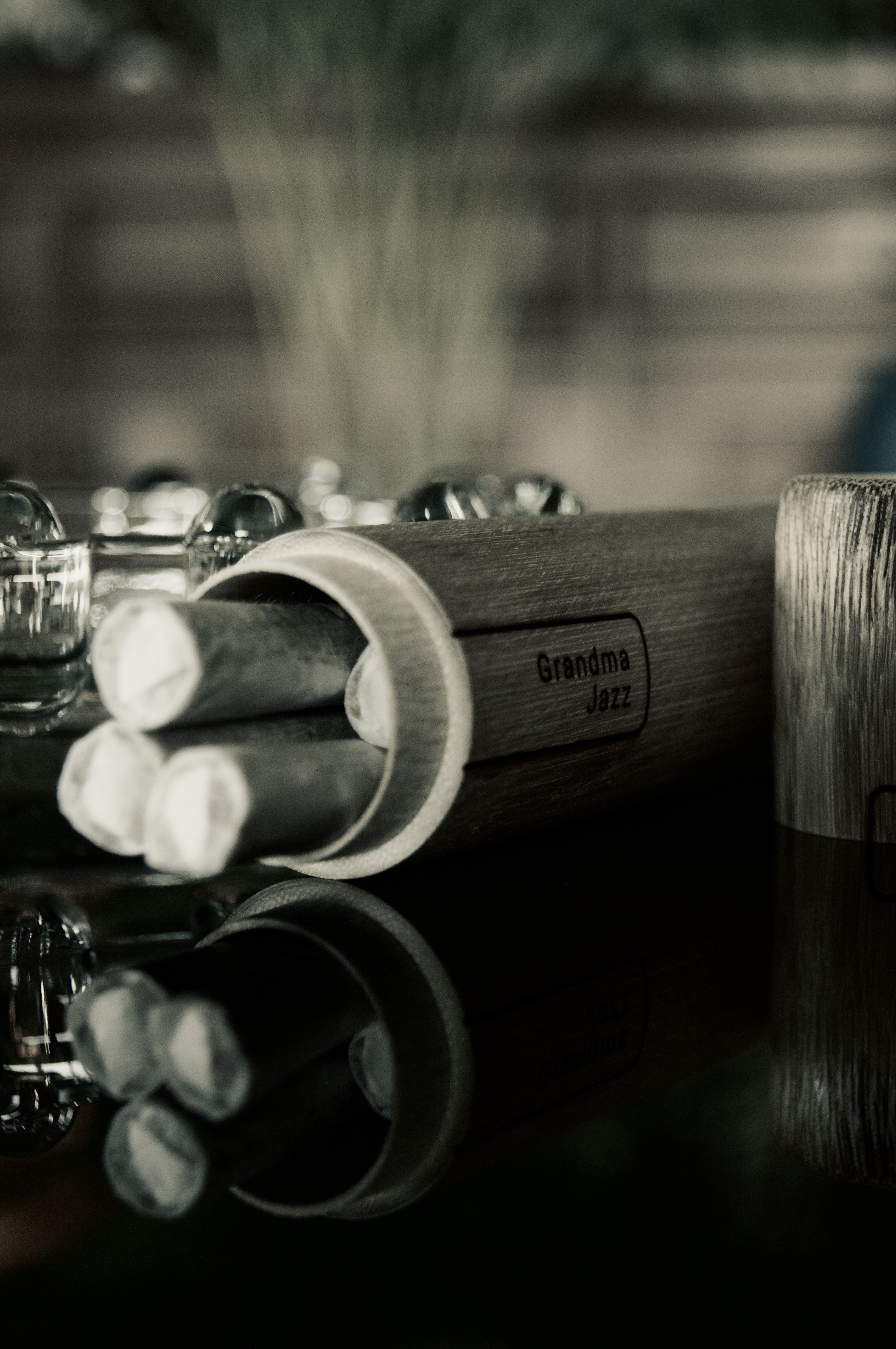
Bamboo where plastic was standard.
Refusing items that didn’t align, even when they were convenient.
Each decision slowed us down.
That was part of the point.
⸻
The biggest shift wasn’t operational.
It was behavioural.
When something is meant to be reused, we treat it differently.
We keep it.
We return it.
We remember where it came from.
The object becomes part of the relationship.
That changed the dynamic immediately.
⸻
GreenFlow emerged naturally from this process.
Not as a program.
Not as a campaign.
But as a way to give language to what was already happening.
The questions we kept coming back to were simple:
Should we be adding to pollution just to smoke a joint?
Would the experience feel cleaner if we knew it wasn’t costing the island more waste?
Those questions guided more decisions than any policy ever could.
⸻
Being plastic-free doesn’t make things easier.
It adds friction.
It adds cost.
It adds conversations we didn’t initially plan for.
But it also adds clarity.
Every decision has to earn its place.
⸻
We’re often asked if this approach is scalable.
The honest answer is:
It depends what you’re trying to scale.
If the goal is speed, plastic wins.
If the goal is care, you have to slow down.
We chose the second.
⸻
This experiment is ongoing.
We adjust.
We remove.
We rethink.
Some solutions stay.
Some don’t.
That’s part of working responsibly instead of performatively.
⸻
Being plastic-free isn’t a claim we make.
It’s a constraint we work within.
It shapes how the space functions, not how it presents itself.
If you don’t notice it immediately, that’s fine.
It’s meant to work quietly.
⸻
This approach won’t suit everyone.
And it isn’t meant to.
But for us, it creates alignment between what the space feels like and how it operates.
That matters.
⸻
We didn’t set out to make a point.
We set out to reduce waste.
Everything else followed from there.
—
Grandma Jazz